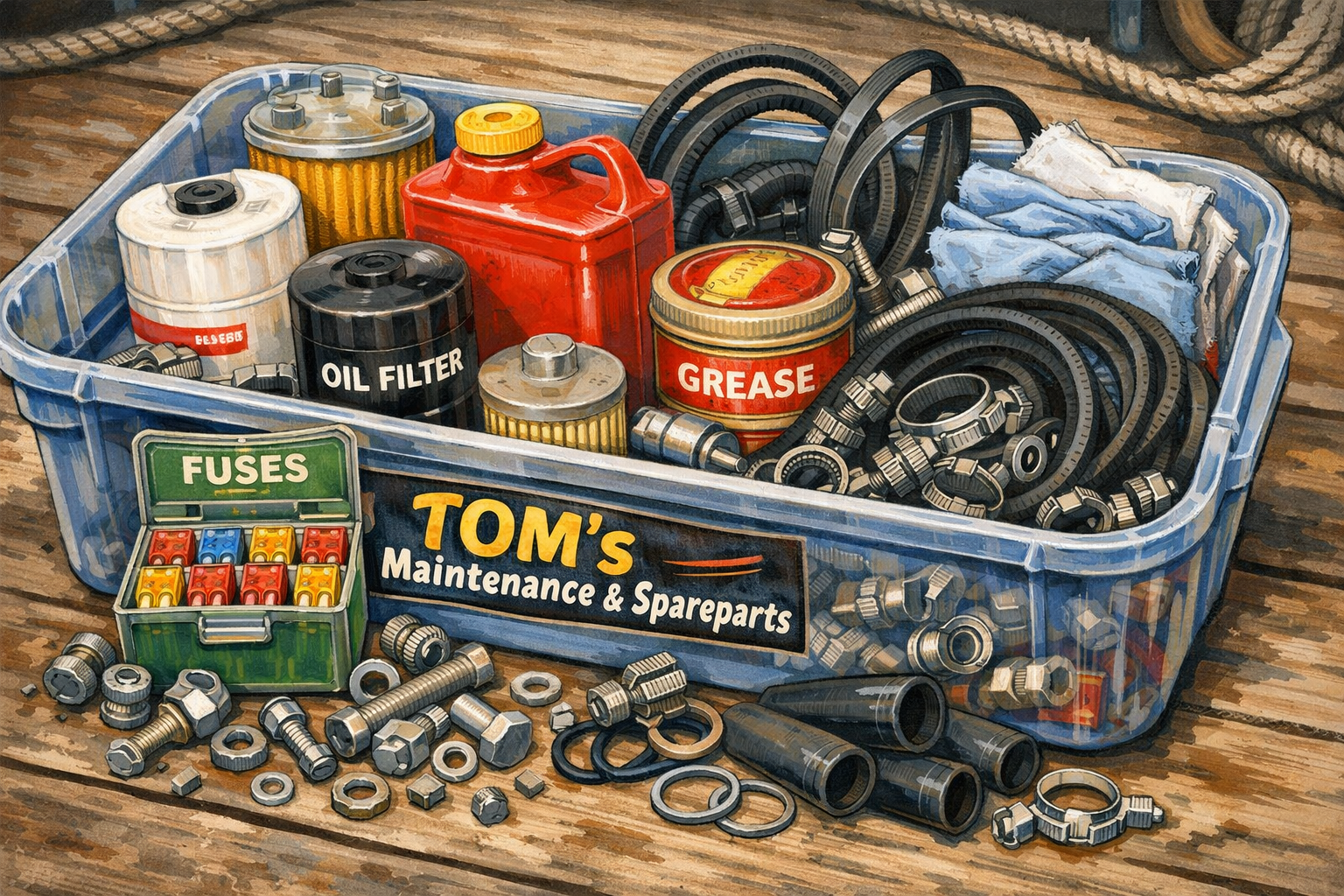
That might be pretty stupid! And yes, like already mentioned in one, or even more of the routes, you should bring spare-parts with you.
They are mandatory for a nice trip! Because belts might break, and filters might get clogged. Read our information
regarding spare-parts and you will be able to fix minor issues yourself.
When you are on a trip, there is always a chance that something starts to mallfunction or just breaks.
You want to fix this, or in a perfect way, or just a quick fix and let a mechanic take care of it
later. Either way........
Yes, you want to get your hands dirty! And yes, we know you have a mechanic, or you have contracted
a company that is actually maintaining your boat for you. But that does not keep you from running into
issues while you are on your way.
Not all parts will last "forever", and that is why you always should bring the essentials
when you are going on a trip that takes you out of eye-range of your home-berth. And if you look at our
Tom, you'll notice that it is not a large boat. And the engine is pretty simple. But even with larger
boats, and a little more sophisticated engines, you still can do alot yourself.
Fuel System Spare Parts
What to bring at least?
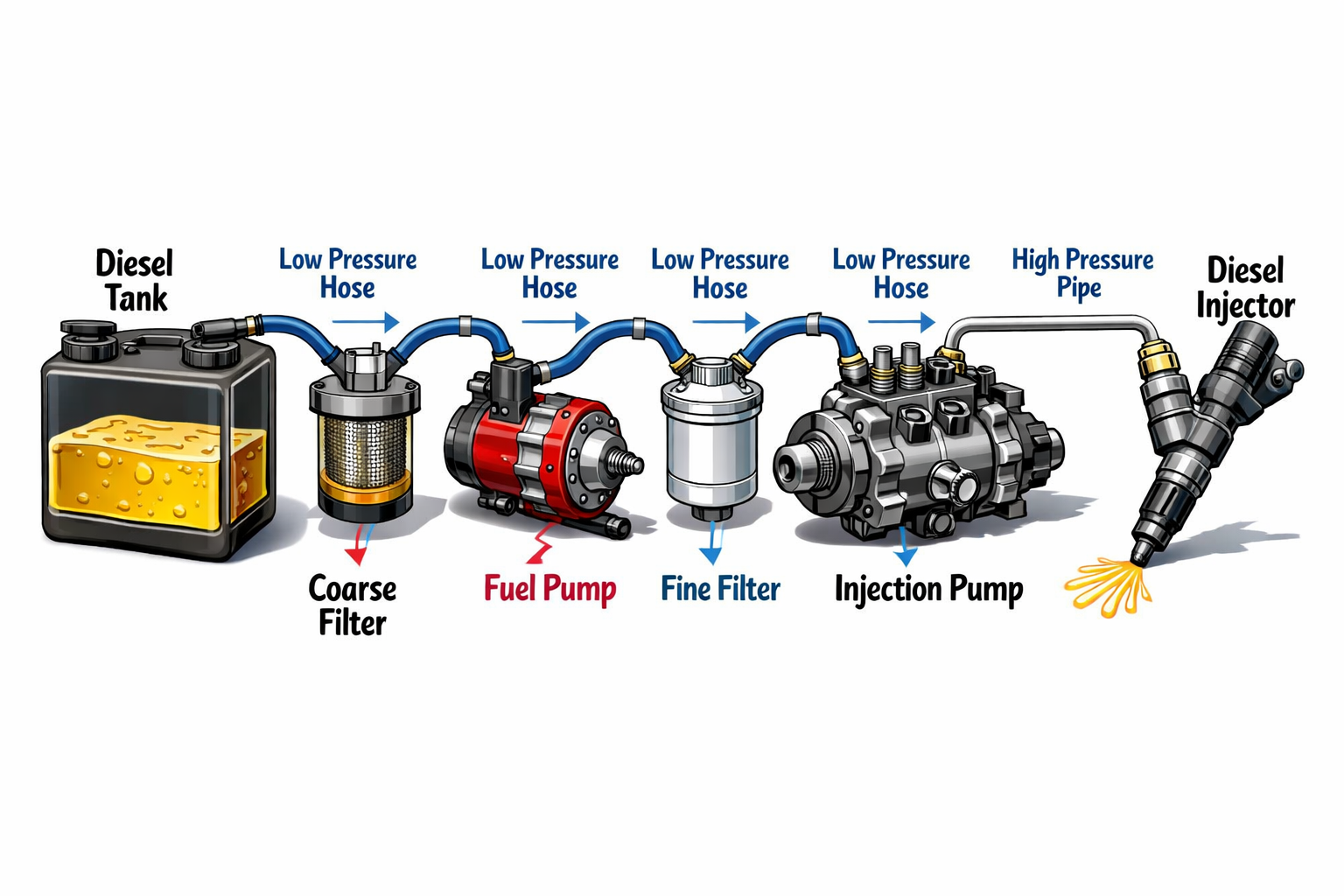
Fig.2 - Fuel Injection System
Fuel System Spare Parts
What you've learned from reading our fuel-system-troubleshooting page,
the system has some sections and parts. Specifically filters. To have (at least) a single coarse filter,
might save your trip. Most of the time, this is (or these are) the filters that might end up clogged at
first. We advise to have at least the amount of filters available, as there are in your system.
Solving issues in your fuelsystem might seem complicated, but if you check our page, you will see
that it isn't that hard to do. Maybe the tight space might be what makes it difficult, but by
it self, it's not rocket technology.
Name, Description and Check
Name
Description
Available
Fuel Coarse Filter
Filter that is mosttly placed first between the tank and the rest of the system
Fuel Fine Filter
Filter that is mostly placed after the Fuel Lift Pump, before the fuel enters the Injection pump
Copper Rings
The fuel lines are mostly connected with "Banjo Bolts". And those need copper rings (washers) to properly seal the connection
Hose Clamps
For the rubber fuel hoses there are specific hose clamps available. They don't cost much, and they are small. Just have 2 of the size you use.
Fuel Hose
Take some length of fuel hose with you. You can always fix a punctured line with some spare hose.
Fuel Dopes
Take fuel dopes with you. You can use anti-bacterial dopes, but also injector cleaner.
Zip Ties
Those can (temporary) take the function of hose-clamps. And might take you home!.
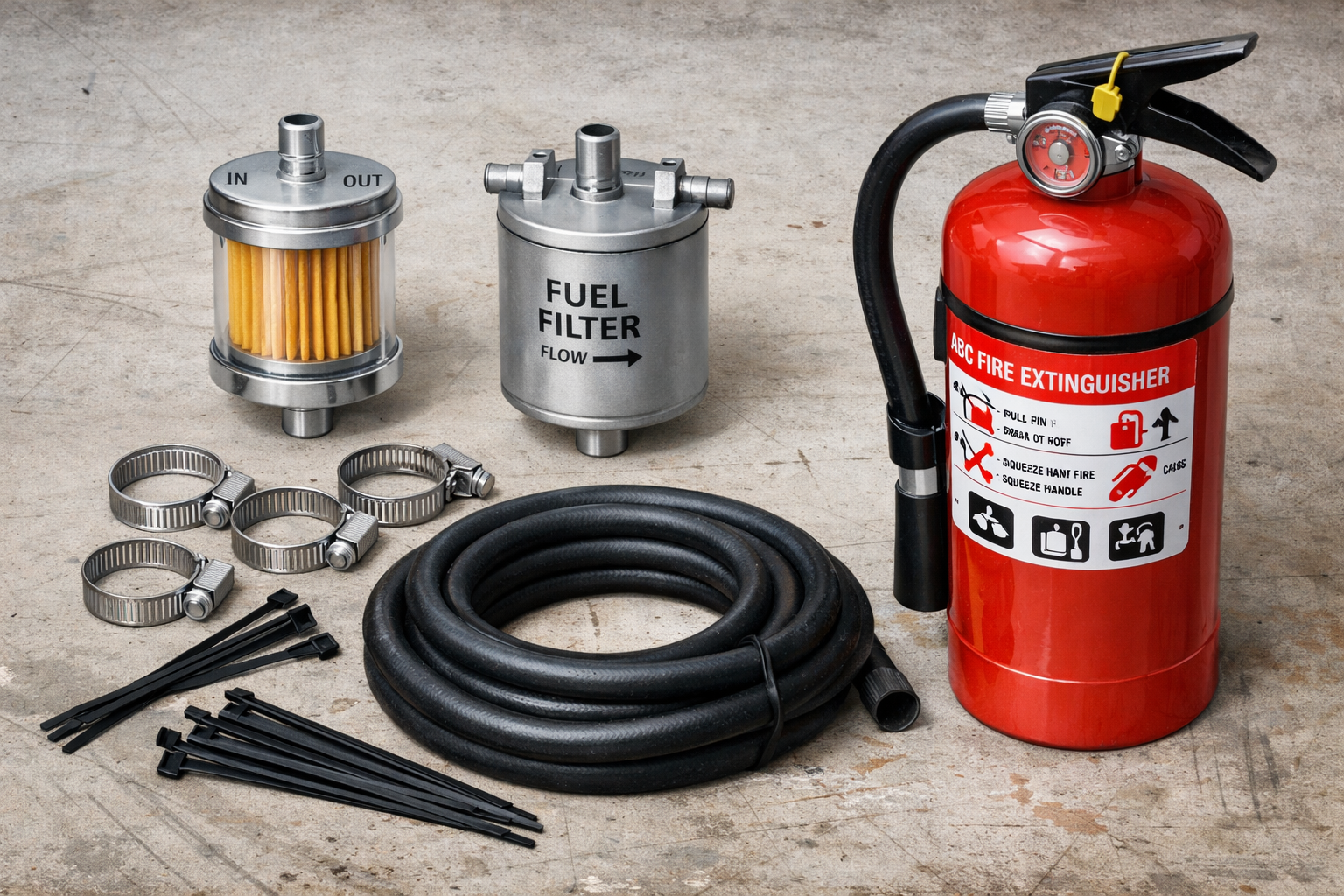
Fig.3 - Fuelsystem spare-parts
But also, hoseclamps, and maybe some flexible fuel hose might be in your spare-box. You should take the table as
some common sense suggestions. Use your own common sense to see what you have on board, and what you
might need. Check what you have before you run to the shop! Because sometimes in some hidden corner
you might find some "gold". And even some paracord might save your day. As long as you just stay calm,
anything is possible.
And always keep a fire fire extinguisher at hand. Working with fuel, there is always a
risk of fire. And also, make sure you have enough rags and some containers to collect the overflow of fuel.
Engine and Drive Train Spare Parts
What to bring at least?
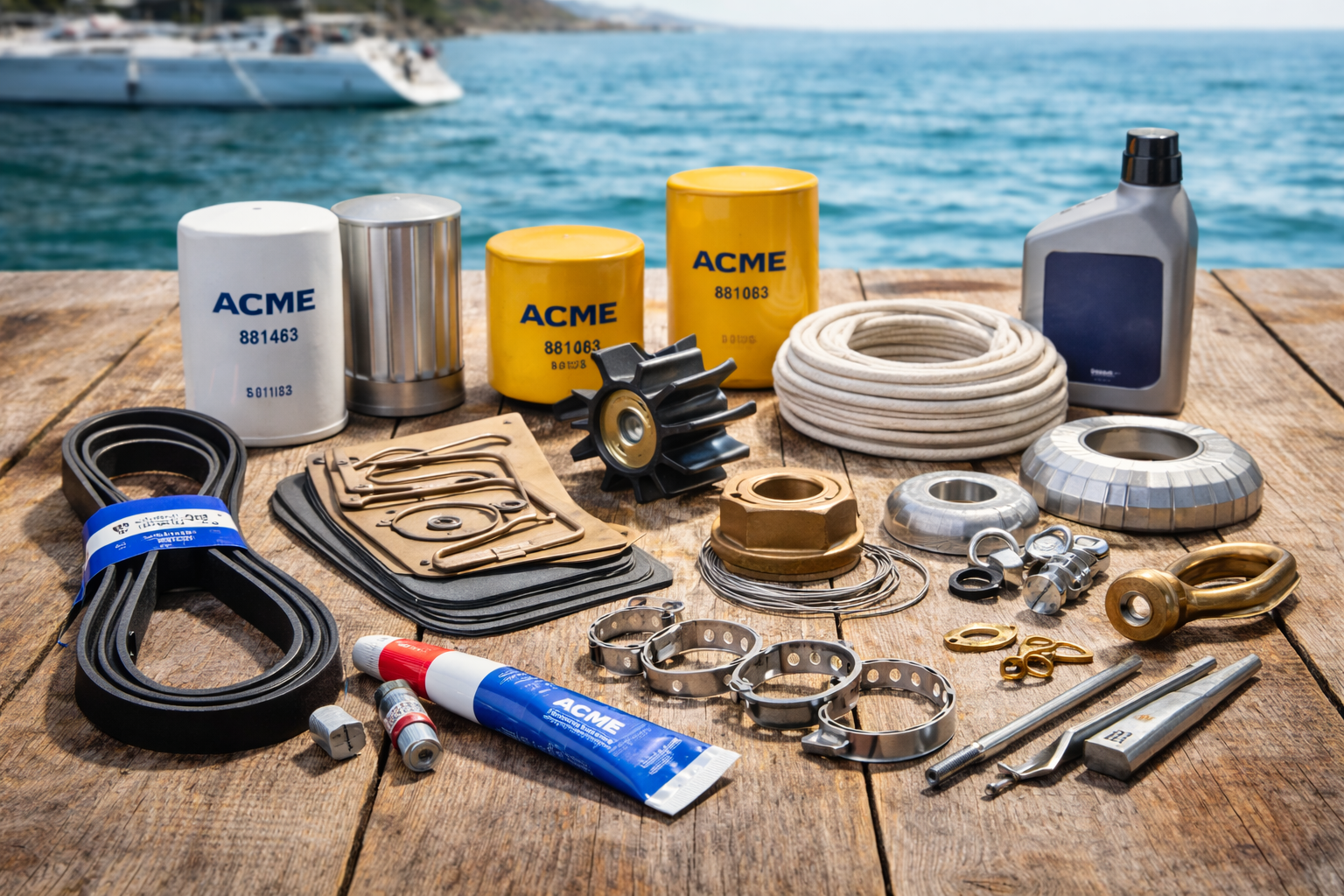
Fig.4 - Engine and Drivetrain Spare-Pars
The Engine and Drivetrain Spare-Parts
Besides a clean and well-maintained fuel system, your engine will also need some spare parts.
In general, the simpler your engine is, the fewer spare parts you will need to carry.
Tom’s engine is a good example of a simple setup. It has no complex electronics or sensors,
which means the list of spare parts is short and easy to manage.
If your engine is more advanced, it is a good idea to ask your dealer or mechanic which spare
parts you should bring along. You can also ask them to show you how to replace these parts,
so you feel more confident if something goes wrong.
Fixing problems in your engine or drivetrain may sound difficult at first, but in many cases
it really isn’t. The engine room can be tight and uncomfortable, which makes the work harder,
but the technology itself is usually quite straightforward.
Even if you cannot fully repair the problem, knowing the basics will often help you keep the
engine running long enough to reach a mechanic safely.
Name, Description and Check
Name
Description
Available
Oil Filters
Filters that filter the motor-oil. Check that you have at least 2 spare.
O-rings
Bring a set of O-rings (different sizes)
Alternator belt(s)
If twin belts, carry a matched pair!
Raw Waterpump Belt
If separate bring one.
Impeller Set
Carry 2. And also make sure you have 2 sets of cover gaskets/o-rings.
Thermostat
Although those don't break down easy, bring one.
Shaft Seal
Grease packing (packing rope) is a traditional seal used around a boat’s propeller shaft.
It is a soft, braided rope soaked with grease, placed in a housing around the rotating shaft.
Its job is to keep most water out while still allowing the shaft to turn smoothly.
A small amount of water is allowed to drip through on purpose, because this cools and lubricates the seal.
The packing is gently tightened with a nut.
Too tight can cause overheating and wear, too loose lets in too much water.
It is a simple, reliable, and widely used system, especially on older boats, but it needs regular adjustment and occasional replacement..
Zip Ties
Those can (temporary) take the function of hose-clamps. And might take you home!.
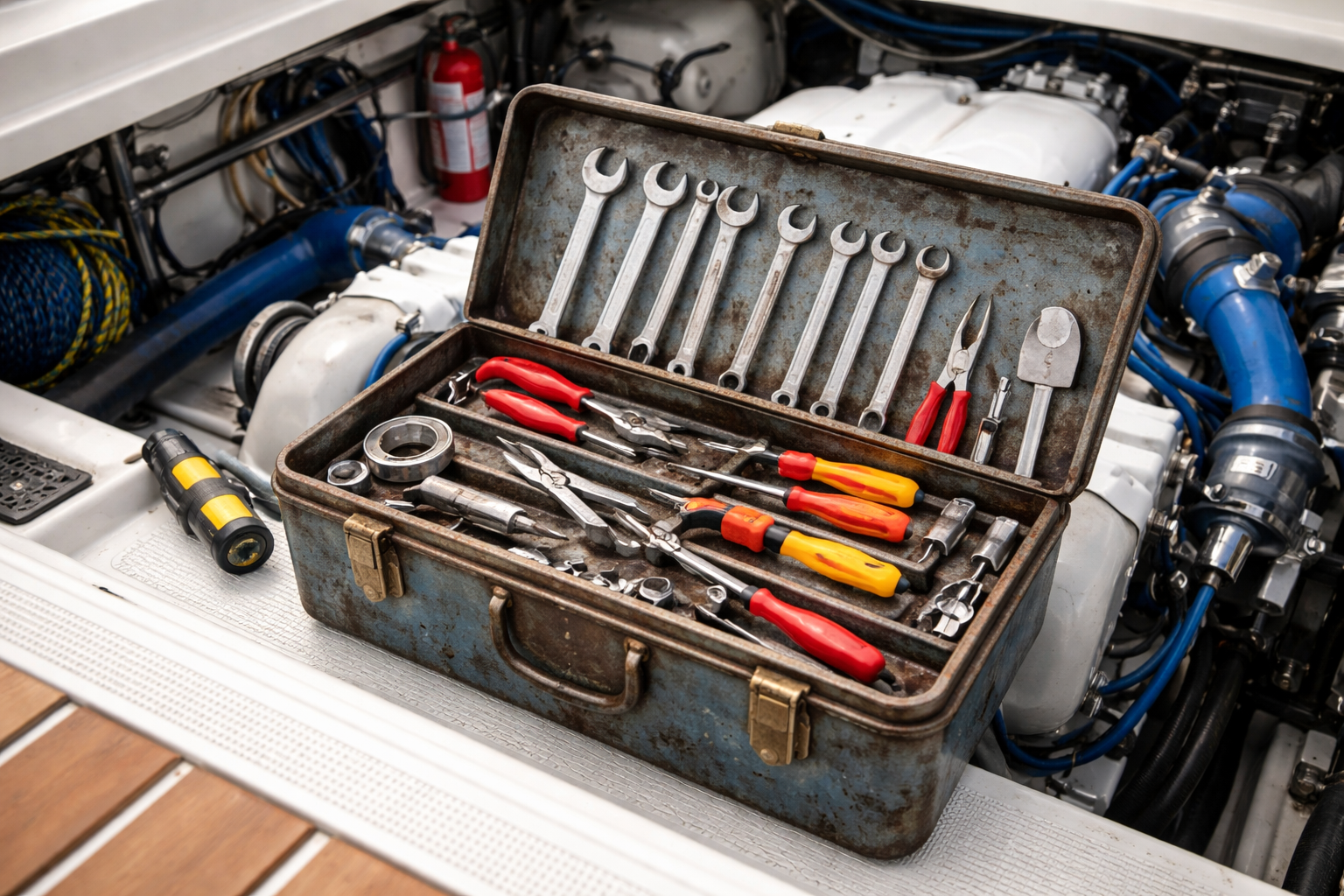
Fig.3 - A Toolbox
Besides the previous, you should bring the following because any of those might just help you to get home,
or to reach a warf or mechanic:
Gaskets, Seals
Fasteners
Assorted copper washers
O-rings (nitrile/Viton)
Valve Cover gasket(s)
Exhaust elbow gasket
Metric bolts/nuts (engine sizes)
It might seem intimidating, but it isn't. On most boats, the engine and drivetrain are pretty simple
and easy to maintain, and easy to fix if there is something going wrong. But the moment that
you maintain properly, it hardly will happen that your drivetrain might cause issues.
Electrical System Spare Parts
What to bring at minimum
Spare Parts for Electrical Systems
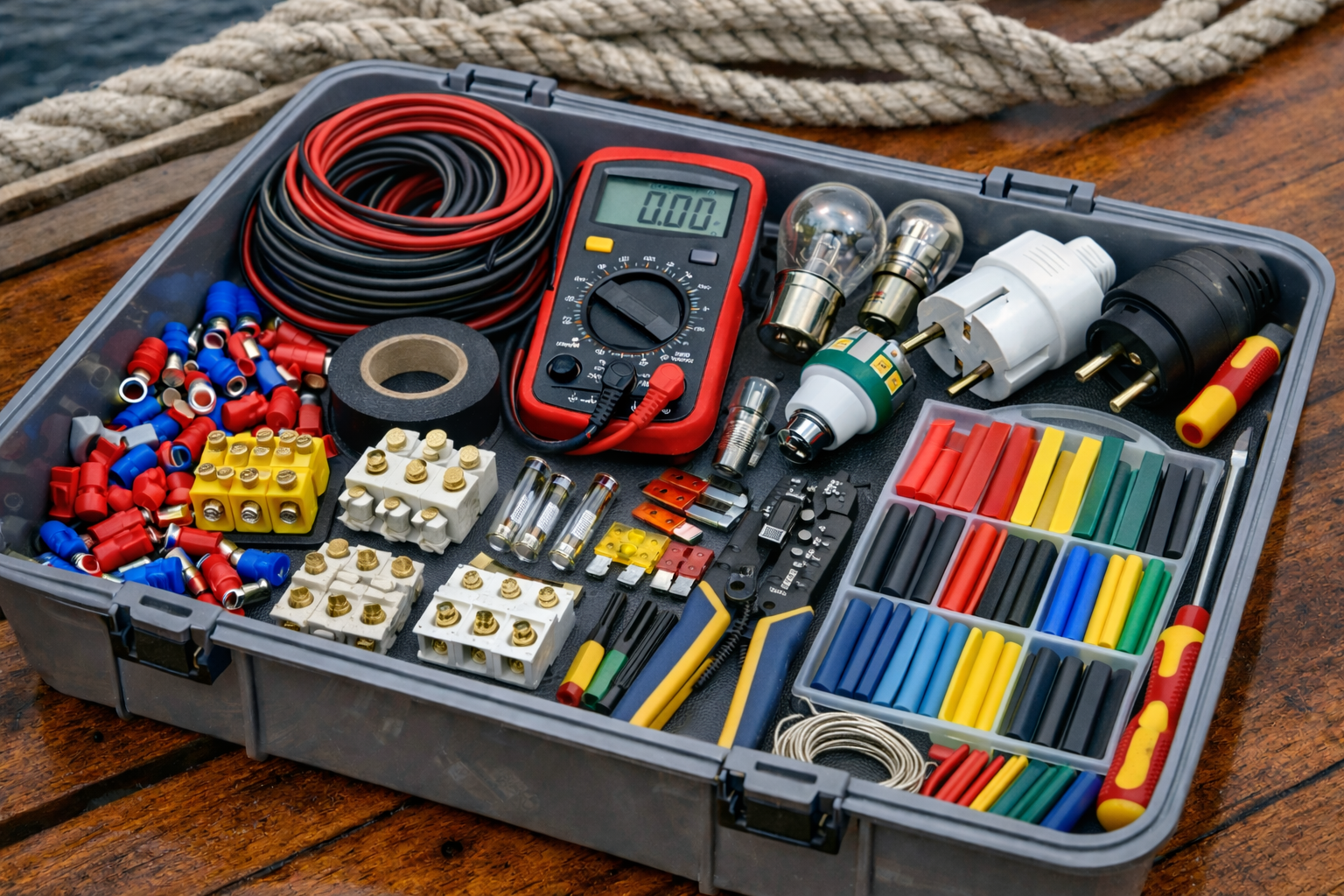
Fig. 4 - Electrical system spare parts
Not every boat has a split or multi-voltage electrical system.
Some boats operate only on DC 12 V, DC 24 V, or even DC 48 V.
Others may combine multiple low-voltage DC systems on a single vessel.
In addition, many boats also have a 230 V AC system.
You should always know which electrical systems are installed and active on your boat.
There are several important items you should keep in your electrical spare-parts box.
Besides the obvious fuses, bringing spare light bulbs is a good idea,
not only for interior lighting but also for navigation lights.
Electrical spare parts checklist
Name
Description
Available
Electrical tape
Multiple colors of electrical tape are useful to have on board.
Blade fuses
Blade fuses come in many types, including Micro2, Micro3, Mini,
Standard (ATO or ATC), and MAXI.
Make sure you carry the correct types and current ratings.
Cartridge fuses
These are commonly used for dashboards and electronic equipment.
They are available in different sizes and current ratings.
Check your equipment to determine which ones you need.
Spare bulbs
Carry spare bulbs for interior lighting and especially for navigation lights.
Crimp connectors
Wires can pull loose from crimp connectors.
Always bring spare connectors and the correct crimping tools.
Multimeter
A multimeter allows you to measure voltage, continuity, and current safely
and to understand what your electrical system is doing.
Electrical cables
Bring short lengths of different cable types and sizes.
You do not need large amounts, only enough for basic repairs.
Zip ties
Simple and versatile items that are useful for cable management
and temporary fixes.
Electrical problems can feel intimidating at first, but there is no need to panic.
Stay calm and approach the problem step by step.
Many basic electrical issues are easier to solve than they initially appear.
In most cases, electrical problems are caused by simple issues,
such as a blown fuse, a loose connection, or a damaged cable.
This is why a multimeter is such a useful tool.
When something stops working, always start with the simplest checks.
First, verify that the main power switch is turned on.
If it is on, switch it off before continuing.
This is a good safety habit and helps prevent short circuits.
Next, locate the fuse or fuses associated with the malfunctioning system.
Inspect them carefully for damage.
Replacing a blown fuse is often enough to restore normal operation.
Keep in mind that some devices have their own internal or inline fuse.
Even if the dashboard fuse is intact, the device may still not function.
Follow the power cable and check for inline fuse holders.
By working logically and checking the basics first,
you can often solve electrical problems quickly and confidently.
No expert knowledge is required.
WARNING!
Despite all good advice to use "aluminium foil", or a "cut nail", or something else conductive
to place where your fuse keeps blowing out, is asking for trouble, and in the worst case
fire!. Do not EVER use something else than the proper fuse replacement in your Electrical
system!
We try to update this website as often as possible!
The upgrade plans
24 Januari 2026
Our upgrade plans.
Support the KNRM!
Help them to help others!
KNRM
I would like to ask you to become a donor for the KNRM.
The KNRM is a fully private organisation, completely run by volunteers, financed by contributions and donations.
You will find all information about them on the website.
You can choose from a single one time payment or a monthly or yearly donation. Please Support
them.
Our personal opinion is that every person out on the water should, by law be told to make a
donation of €25,- per year.
But that is just our opinion.
Copyright, Disclaimer & Attribution
The legal stuff needed because of stupid....
The content on this website may include materials such as text, images, videos, and other media that are the
property of their respective owners. All trademarks, logos, and copyrighted works remain the intellectual property
of their original creators.
We strive to properly attribute and acknowledge all sources. If you are the copyright owner of any material
featured on this site and believe it has been used without appropriate credit or permission, please contact us at
[your contact email] so we can promptly address the issue.
Where applicable, the use of third-party content falls under fair use, creative commons licenses, or other
applicable legal provisions. If specific attribution is required, it is provided directly alongside the respective
material.
The images and data on this site are NOT intended for navigation or critical
decision-making.
Any reliance on this information is strictly at your own risk. The information on this site is for
PERSONAL USE ONLY.
You may print or copy parts of it for your own private use. Commercial use is strictly FORBIDDEN.
Do not sell, rent, or use this data for profit. Unauthorized commercial exploitation will be met with rigorous
legal action to the fullest extent of the law
Furthermore, automated data scraping, harvesting, or feeding this content into large language models or AI systems
is strictly PROHIBITED.
If automated tools crawl this site without express written permission, access will be blocked, and those
responsible will be held liable for
unauthorized bandwidth usage and intellectual property infringement.